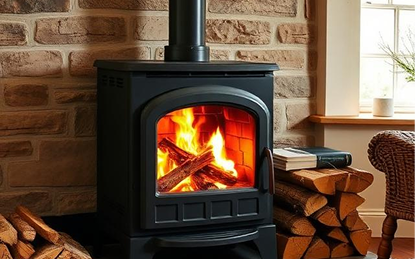
If you own a wood burning stove, the type of wood you use makes a big difference.
Dry wood burns hotter, cleaner and more efficiently. Wet wood does the opposite. It creates more smoke, gives off less heat, blackens your stove glass and can lead to soot and tar building up in your chimney.
That means more cleaning, more wasted fuel and a less enjoyable fire.
What counts as dry wood?
For stove use, dry wood should have a moisture content of 20% or less. This is the level recommended by Defra, HETAS and the Stove Industry Association. Wood above this level produces more smoke and tar, and can damage your stove and chimney over time.
Freshly cut logs can contain a large amount of water. In simple terms, if you burn fresh or poorly seasoned wood, your stove has to waste energy boiling off the moisture before it can produce proper heat.
That is why wet logs often hiss, smoke and struggle to burn well.
Why modern stoves need dry wood
Modern wood burning stoves are designed to burn efficiently.
But they can only do that when the right fuel is used.
When you burn properly seasoned or kiln dried logs, your stove can reach the right temperature faster and keep a cleaner burn. This means:
- More heat from each log
- Less smoke
- Cleaner stove glass
- Less soot in the flue
- Lower maintenance costs
- A better fire with fewer logs
Wet wood can make even a good quality stove perform badly.
Look for the Ready to Burn logo
If you buy logs, the easiest way to choose the right fuel is to look for the Ready to Burn logo.
Wood sold in England in volumes of up to 2 cubic metres must be certified as Ready to Burn, meaning it has a moisture content of 20% or less and is suitable for immediate use. This legislation has been in place since May 2021.
This gives you confidence that the firewood you are buying is suitable for your stove.
Can you season your own logs?
Yes, but it takes time.
Freshly felled timber needs to be cut, split and stored correctly before it is ready to burn. Ideally, logs should be kept in a covered, well-ventilated log store where air can move freely around them.
Drying time depends on the type of wood, the size of the logs and how well they are stored.
As a rough guide:
- Ash can season in around 12 months
- Many hardwoods need 18 to 24 months
- Oak can take up to 36 months
A moisture meter is a simple and affordable way to check whether your logs are ready. The Stove Industry Association recommends checking the moisture content to ensure it is below 20% before burning.
Dry wood saves money too
Dry wood gives you more usable heat from each log.
That means you usually need fewer logs to achieve the same warmth. So while cheap wet logs may look like a saving, they often cost more in the long run because they burn poorly and create more maintenance issues.
Burn better wood, and your stove will work better.
A simple rule for stove owners
If you want a warmer, cleaner and more efficient fire, use good quality dry logs.
Choose “Ready to Burn” certified wood, store it properly, and avoid burning anything wet, painted, treated or unsuitable for your stove.
Your stove glass will stay cleaner.
Your chimney will thank you.
And your home will get more heat from every log.